Latest update: November 16, 2026 - 10 min read
FAVR Program Examples: Two Real Program Designs
For US employers comparing FAVR with a car allowance or the IRS standard mileage rate.
A FAVR program is only as good as its design and its data. Here are two programs we built from real driver data, each a FAVR car allowance example you can compare with your own team. One cuts tax waste for a multi-state company. The other pays field staff fairly for the cars they rely on. Names and identifying details have been removed, and every assumption is listed at the end.
$82,438
in annual tax waste removed for a 17-driver team on a flat car allowance
Up to 30%
lower annual program cost, with drivers taking home more after tax
7 of 7
nonprofit field staff paid more under every FAVR plan than with cents-per-mile
For how FAVR works and the IRS rules behind it, see What is FAVR? and IRS FAVR rules and requirements.
Example 1: A restaurant group stops paying tax on its car allowance
Restaurant and hospitality17 regional operations leaders8 states5,500–16,000 business miles a year
The starting point
- Every driver got the same $13,500 a year car allowance plus a company gas card
- The allowance was taxable income. About $4,850 per driver each year went to income and payroll taxes before it reached anyone’s bank account
- The flat amount was the same whether fuel cost $5.50 a gallon in California or $3.40 in Georgia, so some drivers came out ahead and others fell behind
- Gas cards were hard to control and easy to misuse
What we designed
- Three FAVR programs, each built on a progressively more expensive base vehicle ($39,600, $46,706 and $49,770), with a six-year retention period
- A fixed monthly rate for each driver’s ownership costs and a variable per-mile rate for fuel and maintenance, both based on local costs
- Reimbursements paid tax-free under IRS FAVR rules, with no gas cards
- Drivers in high-cost states get more, drivers in low-cost states get less, and everyone is paid for what driving actually costs where they live
Why a smaller check can be worth more
On paper, $1,125 a month looks generous. Here’s what one Bay Area regional director driving 16,000 business miles a year actually took home each month, compared with the FAVR designs:
Today
Allowance after tax + fuel on gas card: $967 take-home
FAVR design 1
Tax-free reimbursement
FAVR design 3
Tax-free reimbursement
This driver takes home $967 a month today and $1,312 under design 3, which is $346 more each month.
The results across all 17 drivers
| Program | Average fixed rate | Average variable rate |
|---|---|---|
| Today: allowance + gas card | $1,125/month | Gas card |
| FAVR design 1 (lowest cost) | $603/month | $0.35/mile |
| FAVR design 2 | $676/month | $0.32/mile |
| FAVR design 3 (most for drivers) | $727/month | $0.34/mile |
- $82,438 in annual tax waste removed
- Up to 30% lower annual program cost, with drivers taking home more after tax
- Design 1 saves $71,538 a year after Driversnote’s fees
Every design saves the company money and puts more after-tax money in drivers’ pockets overall. In the next round of design, rates can be adjusted so no individual driver takes home less than today.
Example 2: A nonprofit moves beyond cents-per-mile
Nonprofit13 field staffPacific Northwest200–9,300 business miles a year
The starting point
- Staff were reimbursed at the IRS standard mileage rate of $0.76 a mile, tracked in individual spreadsheets
- A per-mile rate pays nothing extra toward the fixed costs of owning the car, like insurance, registration and depreciation. Staff who drive less are the most underpaid
- Managing a spreadsheet for every employee took real admin time every month
What they asked for
- Pay staff appropriately for the real costs of their work
- Remove the admin burden of individual spreadsheets
- Stay within the organization’s budget
- Keep it simple for everyone
Three FAVR plans for staff driving more than 5,000 business miles
Seven staff members meet the IRS FAVR threshold of 5,000 business miles a year. We built three plans for them around base vehicles that match what the team drives, starting with the compact SUVs most of them already own. The base vehicle sets the rates. It doesn’t dictate what anyone has to drive.
| Plan | Base vehicle | Fixed rate | Variable rate |
|---|---|---|---|
| Today: IRS standard rate | – | – | $0.76/mile |
| Plan 1 (budget-friendly) | Compact SUV ($30,591) | $421/month | $0.24/mile |
| Plan 2 | Mid-size SUV ($33,750) | $440/month | $0.28/mile |
| Plan 3 | Full-size pickup ($38,160) | $489/month | $0.32/mile |
Base vehicle values are at 90% of MSRP, with a seven-year retention period. Every one of the seven staff members is paid more under every plan. The biggest gain goes to the lowest-mileage driver: at 5,000 miles a year, plan 1 pays $522 a month instead of $317.
The gap is widest for the lowest-mileage drivers, because the IRS rate pays nothing extra toward owning the car.
How do you combine FAVR with other reimbursement methods?
Staff who drive fewer than 5,000 business miles don’t qualify for FAVR. So the nonprofit’s program gives them a clear tier of their own, and all three tiers run in the same app.
1,200–5,000 miles
Accountable plan allowance
A tax-free monthly amount the organization sets, such as $250, or two tiers of $175 and $325.
5,000+ miles
FAVR
A fixed and variable rate covering the real cost of owning and driving the car.
This tiered setup works for most companies. FAVR goes where it makes the biggest difference, and everyone else stays on a simple tax-free method. How to calculate a FAVR allowance shows how the FAVR rates are built.
What’s included in a Driversnote FAVR program?
Driversnote, a mileage tracking app that logs trips automatically, designs and runs FAVR programs too. We design it, run it and keep improving it, for $294 per participant per year, with no setup fees or add-ons. Admins are free, and you might even qualify for a discount.
Program and payments
- Consultation and design
- Individual rates by home ZIP code
- Yearly rate and cost-data refresh
- Payments by direct deposit
Tracking and reporting
- The Driversnote app with automatic mileage tracking
- iBeacons included
- Simple report approval flows
Validation and compliance
- Annual vehicle validation
- Continual license and insurance validation
- IRS-compliant, audit-ready records
- Quarterly tax reports
Admin and support
- Reporting and analytics
- Onboarding and support from real people
- Team management
About these examples
Both examples are FAVR program designs Driversnote prepared using each organization’s own driver data: home ZIP codes, annual business miles and current reimbursement. Names and identifying details have been removed. Final results depend on the program parameters each organization chooses.
Example 1 assumes 26 mpg, trailing 12-month average fuel prices per state, 22% federal income tax withholding, 7.65% FICA and state income tax where it applies. Only the flat allowance is treated as taxable, and the gas card as a company expense. Company savings are shown before Driversnote’s service fee of $294 per participant per year ($4,998 for 17 drivers); design 1 saves $71,538 after fees. The 17 drivers include two planned hires.
What would a better program be worth for your team? Send us your driver data and we’ll design up to three FAVR programs for you, with the savings and take-home pay for every driver. The consultation is free, with no obligations, and we keep your information strictly confidential. Get your free program design
FAQ
Not always, but in the restaurant group's design it did. Every option cost the company less than its flat allowance, and drivers took home more after tax. The result depends on your current allowance, your drivers' mileage and where they live.
Yes. Rates can be adjusted in the next round of design so that no individual driver takes home less than under the old allowance.
You need each driver's home ZIP code, their estimated annual business miles and their current reimbursement. From that, Driversnote can show who qualifies and what each design would cost and pay.
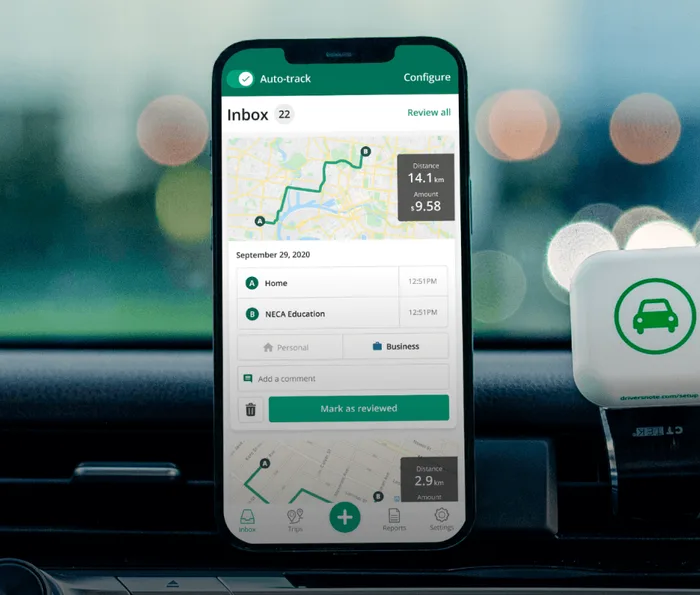
Tired of logging mileage by hand?
Effortless. IRS-compliant. Liberating.
 Auto-track trips
 Classify trips
 IRS-compliant reports